
For illustration purpose only. (Picture from Adobe Express)

Malaysia’s Obesity Crisis: Transform Your Health with Weight Crafters Slimming Camp

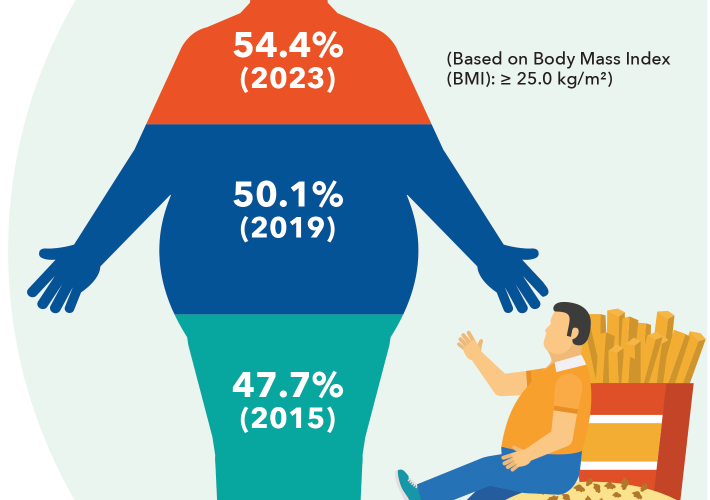
Malaysia is facing an escalating obesity crisis that demands urgent attention. According to the Selangor Journal, the National Health and Morbidity Survey 2023 revealed a staggering 54.4% of Malaysian adults are either overweight or obese, a significant rise from 44.5% in 2011. This alarming trend not only impacts individual health but also places a heavy burden on the nation’s economy, with obesity-related healthcare costs and productivity losses estimated at RM26.8 billion in 2019. If left unchecked, experts project these costs could skyrocket to RM493 billion by 2060.


The Root Causes of Malaysia’s Obesity Epidemic

The rise in obesity is driven by a combination of modern lifestyle factors. Late-night eating habits, fueled by Malaysia’s vibrant 24-hour food culture, contribute significantly to weight gain. Sedentary lifestyles, with many individuals spending long hours at desks or in front of screens, further exacerbate the issue. The Selangor Journal highlights that these habits, combined with easy access to high-calorie foods, have created a perfect storm for obesity. The consequences are severe, with obesity linked to chronic conditions such as type 2 diabetes, hypertension, cardiovascular disease, and certain cancers, all of which strain both personal well-being and the national healthcare system.

Proposed Solutions and National Efforts

To combat this crisis, experts and policymakers are advocating for bold measures. Proposals include a 10% surcharge on late-night food purchases to discourage unhealthy eating habits, stricter regulations on high-calorie food marketing, and workplace incentives to promote physical activity. These initiatives aim to shift cultural norms toward healthier lifestyles and reduce the economic burden of obesity. However, individual action is equally critical, as sustainable change begins with personal commitment to better health practices.
 

How Weight Crafters Slimming Camp Can Help

At Weight Crafters Slimming Camp in Forest City, Johor Bahru, we’re dedicated to empowering Malaysians to take control of their health. Our holistic slimming retreat offers a transformative experience designed to address the root causes of weight gain while fostering sustainable lifestyle changes. Here’s what sets us apart:

  • Personalized Programs: Tailored weight loss plans crafted by medical experts, nutritionists, and fitness coaches to suit all ages and fitness levels.
  • Comprehensive Fitness: Engage in a variety of activities, including gym workouts, swimming, pickleball, and scenic hikes, all guided by professionals.
  • Nutritious Dining: Enjoy scientifically designed meals that are delicious and satisfying, debunking the myth that healthy eating means deprivation.
  • Supportive Environment: Immerse yourself in the serene vibes of Forest City, with time for reflection and personal growth in a distraction-free setting.

 

Why Choose Weight Crafters?

Nestled in the tranquil surroundings of Forest City, Johor Bahru, Weight Crafters Slimming Camp offers more than just a weight loss program—it’s a journey toward a healthier, happier you. Our retreat combines expert guidance with a nurturing community, helping participants build lasting habits. As one guest, Sarah L., shared, “The camp gave me the tools and confidence to transform my lifestyle. It’s not just about losing weight; it’s about gaining a new perspective on health.”

Our programs are designed to address the challenges highlighted in Malaysia’s obesity crisis. By focusing on balanced nutrition, regular physical activity, and mental well-being, we empower participants to break free from unhealthy habits and embrace a sustainable approach to wellness. Whether you’re looking to shed pounds, manage stress, or boost your overall health, Weight Crafters provides the support and expertise you need to succeed.


Tackling Malaysia’s Obesity Epidemic: A Path to Healthier Living with Weight Crafters

Malaysia is facing a critical health challenge, with over 50% of adults classified as overweight or obese, according to the 2019 National Health and Morbidity Survey. Obesity, defined as a Body Mass Index (BMI) of 27.5 or higher for Asians, is linked to serious conditions like type 2 diabetes, heart disease, and joint issues, impacting quality of life and longevity. Factors such as unhealthy diets, lack of physical activity, and genetic predispositions are driving this epidemic. At Weight Crafters Slimming Camp, we’re dedicated to helping Malaysians overcome obesity through sustainable, non-surgical solutions tailored to your needs.

While bariatric surgery, such as gastric sleeve or bypass, can be effective for severe cases—offering up to 60–80% excess weight loss and improvements in health conditions—it’s not the only path. At Weight Crafters, we focus on holistic weight management without invasive procedures. Our programs combine personalized fitness plans, expert nutritional guidance, and ongoing support to address the root causes of obesity, like poor eating habits and sedentary lifestyles. Unlike surgery, which requires lifelong dietary adjustments and carries risks, our approach empowers you to achieve lasting results through lifestyle transformation.

Located in the heart of Malaysia, Weight Crafters Slimming Camp offers a supportive environment to kickstart your journey to a healthier you. Our expert coaches guide you every step of the way, helping you build habits that prevent obesity-related health issues and improve overall well-being. Join us today to take control of your health and become part of Malaysia’s movement toward a fitter, healthier future!

Trend in Overweight & Obesity Among Adults in Malaysia from 2011 to 2023

Malaysia’s Obesity Crisis: Why Now Is the Time to Act

Malaysia is grappling with a serious health challenge, as revealed by the 2023 National Health and Morbidity Survey (NHMS), which found that 54.5% of adults are overweight or obese—a rise from 50.1% in 2019. This alarming trend underscores the urgent need for action to address the growing prevalence of non-communicable diseases (NCDs) like diabetes, hypertension, and high cholesterol, which impact nearly 2.3 million adults with three NCDs and over 500,000 with four. At Weight Crafters Slimming Camp, we’re committed to helping Malaysians reverse this trend and embrace healthier lifestyles.

The NHMS 2023 also highlighted concerning lifestyle habits: one in three adults is physically inactive, and a staggering 95.1% fail to eat the recommended five daily servings of fruits and vegetables. These factors, combined with easy access to calorie-rich foods, are fueling Malaysia’s obesity epidemic. The Ministry of Health has introduced measures like sugar taxes, but lasting change starts with individual commitment.

At Weight Crafters Slimming Camp, we offer tailored programs that blend fitness training, nutritional guidance, and motivational support to help you achieve sustainable weight loss. Our expert coaches empower you to build healthy habits that last a lifetime, addressing the root causes of weight gain. Join us today to take charge of your health and contribute to a fitter, healthier Malaysia!

Statistics for the Malaysian Obesity Rate during the year 2023

Day by day, Malaysians Are Getting Obese!

Statistics for the Malaysian Obesity Rate during the year 2023

The Alarming Rise of Obesity in Malaysia – Time to Take Action!

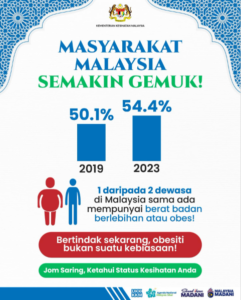
Recent data from the National Health and Morbidity Survey (NHMS) 2023 reveals a concerning trend: 1 in 2 Malaysian adults is now classified as overweight or obese. The prevalence of overweight and obesity has surged from 50.1% in 2019 to 54.4% in 2023, marking a significant increase in just four years.

Why Is This a Serious Concern?

Obesity is not just about appearance—it is a major risk factor for severe health conditions, including:
Diabetes – Increased body fat affects insulin sensitivity, leading to type 2 diabetes.
Hypertension – Excess weight puts added strain on the heart, raising blood pressure.
High Cholesterol – Unhealthy fat accumulation contributes to dangerous cholesterol levels.
Heart Disease – Obesity increases the likelihood of heart attacks, strokes, and cardiovascular complications.

Breaking the Cycle – Healthy Living Starts Now!

It’s easy to think that being overweight is normal, but obesity should not be accepted as a lifestyle norm. The good news? It’s preventable and manageable with the right approach:
Eat Smart – Balanced, nutritious meals that fuel your body properly.
Stay Active – Regular exercise helps maintain a healthy weight and improves overall fitness.
Avoid Harmful Habits – Cut down on smoking and alcohol, both of which contribute to weight gain and health deterioration.

At Weight Crafters Slimming Camp, we believe in sustainable weight management through structured fitness programs, expert guidance, and a supportive environment. Whether you’re struggling with weight gain or looking to adopt a healthier lifestyle, our all-inclusive retreat in Forest City, Johor Bahru offers the perfect setting to regain control of your health.

It’s never too late to take charge of your well-being. Start your transformation today!


Lose weight by breathing through your nose

When you lose weight, where does the fat go? With all the attention on losing weight, you’d think more people would understand this dramatic point. Quick – think of two possible answers for how the weight you lose leaves your body.

When we lose weight, where does the fat go?

Misconceptions about how we lose weight are widespread. Most people get it wrong, and according to the authors of a 2014 study published in the British Medical Journal (BMJ), so do “…general practitioners, dietitians, and personal trainers.” In their paper entitled “When somebody loses weight, where does the fat go?” Ruben Meerman and Andrew Brown of Australia’s University of New South Wales report that most people believe fat is converted to energy or heat, but this “violates the law of conservation of mass.” Among other common misconceptions were that metabolites of fat are converted to muscle tissue, or excreted when we go to the bathroom.

Translating science into plain English

In practical terms, the researchers say that an average person weighing about 155 lb. who eats a mixed diet and who breathes approximately 12 times per minute will exhale some 7 ounces of carbon (metabolized fat) in a day divide equally into 8 hours of sleep, 8 hours at rest, and 8 hours engaged in light activity that doubles the resting metabolism rate. Replacing one resting hour with moderate exertion like jogging (raising the metabolism to about 7 times resting rate) will increase that carbon exhalation by about 20%.

To turn that around, if you lose 22 lbs. of fats (in the form of triglyceride), about 18 lbs. of that total goes out as exhaled breath. The bad news is that it doesn’t take very much excess food to erase the loss of fat. This drives home the truth that neither exercise nor diet alone will help you lose weight in a healthy way.

Increased exercise with reduced calorie intake is the key

The researchers’ calculations show that the lungs are the primary organ for the elimination fat. Losing weight requires unlocking the carbon stored in fat cells, which lends authority to the often-repeated imperative that if you want to lose weight, you must “eat less, move more.”

How does nose breathing figure in this?

Many sports trainers and elite athletes, as well as average weekend joggers and basketball players, easily accept the notion that it takes less effort to breathe through the mouth during exercise. However, it turns out that nose breathing is easier, more efficient and more beneficial than conventional wisdom would suggest. Hyperventilation – the heaving mouth-breathing that often goes along with extreme exertion – can result in an inefficient exchange of oxygen and carbon dioxide. More measured nasal breathing helps keep the appropriate balance.

Asthma, Athletics – Dieters?

Beginning in the 1950s, the Ukranian physician K.P. Buteyko spent years pursuing the idea that hyperventilation was especially detrimental to people with heart problems and asthma, who can habitually react to shortness of breath by gulping air through their mouths. The Buteyko breathing technique has been shown to help patients with severe asthma whose dependence on steroid-based medicine puts them at risk. There is also a strand of medical research that suggests an additional benefit of nasal breathing: Nitric Oxide, which enters the lungs at low levels via the nasal passages, can help to improve lung function, fight bacteria and act to improve blood flow. Today, more athletes and trainers are coming around to the idea that measured breathing through the nose is better for peak performance and for cooling down.

Tips to help you stop mouth breathing

Here are some tips to help you stop being a ‘mouth breather’ and develop a healthier nose breathing habit, based on advice at LiveStrong.com:

Sit up with your back straight, close your mouth in a relaxed way, and tilt your head back a little while inhaling some deep breaths through the nose. Many mouth-breathers (and lots of people who work at a computer keyboard) tend to hunch forward, closing off the airway.

If your nose feels too blocked to let in a good breath, try this Buteyko nose-clearing method: inhale, then exhale completely through your nose. Now pinch your nostrils closed with your fingers, and hold the out-breath for several seconds. Release your nostrils and inhale forcefully through your nose.

For chronically stuffed nose, see your doctor for advice on using saline nasal spray, an adhesive strip to help open nasal passages, or a netti pot to relieve congestion.

Relaxation, better breathing, more effective weight loss

It’s logical that bad breathing habits can arise from being overweight and out of condition – if you get out of breath easily, you’re more prone to develop a mouth-breathing habit, with all its detriments including hyperventilation, stuffy nose, and imbalance in the ratio of oxygen intake to carbon dioxide exhalation. So, breathe through your nose, eat less, add more exercise as you’re able, and enjoy the benefits of healthy weight loss.

Childhood obesity is a global health issue

Childhood obesity is a global health issue that brings numerous potential health risks and social impacts. Here are some major potential risks:

1. Physical Health Risks:
– Metabolic Syndrome: Obese children are more likely to develop metabolic syndrome, which includes high blood pressure, high blood sugar, insulin resistance, and abnormal fat distribution.
– Type 2 Diabetes: Obesity increases the risk of children developing type 2 diabetes, a condition previously more common in adults.
– Cardiovascular Diseases: Obese children may develop cardiovascular problems such as coronary heart disease and stroke earlier in adulthood.
– Respiratory Issues: Including asthma and sleep apnea.
– Bone and Joint Problems: Excess weight can put additional stress on bones and joints, potentially leading to conditions like osteoarthritis.

2. Mental Health Risks:
– Psychological Stress and Depression: Obese children may face teasing and bullying due to their appearance and weight, leading to low self-esteem, depression, and anxiety.
– Social Isolation: Weight issues may cause social difficulties, affecting the development of friendships and social skills.

3. Behavioral and Learning Issues:
– Academic Performance Decline: Obese children may miss more school due to health issues, affecting their academic performance.
– Behavioral Problems: Such as Attention Deficit Hyperactivity Disorder (ADHD).

4. Adult Health Problems:
– Obese children are more likely to become obese adults, facing increased health risks like cancer, heart disease, and metabolic disorders.

5. Economic and Social Costs:
– Health problems related to obesity increase medical costs, placing financial burdens on families and society.
– Obesity may impact future employment and income, leading to a decline in socioeconomic status.

Preventing and managing childhood obesity requires multifaceted efforts, including dietary management, increased physical activity, psychological support, and the collective involvement of families and society. Early intervention and education are crucial to help children develop healthy habits and reduce the risks associated with obesity.

Relationship Between Obesity and Depression

  1. Psychological Factors: Self-Esteem and Self-Image
    Low Self-Esteem: Obese individuals often experience low self-esteem due to societal prejudices and negative self-image. This low self-esteem increases the risk of depression.
  2. Social Isolation
    Discrimination and Isolation: Obese individuals may face increased social isolation and discrimination, leading to higher psychological stress and, consequently, depression.
  3. Physiological Factors: Inflammation and Hormones
    Chronic Inflammation: Both obesity and depression are associated with chronic inflammation. Fat cells in obese individuals secrete pro-inflammatory factors that can affect brain function and mood.
    Hormonal Changes: Hormonal imbalances due to obesity can influence brain function, contributing to depressive symptoms.
  4. Neurotransmitters
    Neurotransmitter Imbalance: Obesity and depression may both disrupt the balance of neurotransmitters in the brain, such as serotonin and dopamine, which are crucial for regulating mood and feelings of pleasure.
  5. Lifestyle Factors: Diet and Exercise
    Unhealthy Habits: Poor dietary habits and lack of exercise are both causes of obesity and triggers for depression. These factors can create a vicious cycle where depression leads to further unhealthy habits and weight gain.
  6. Medication Factors: Side Effects
    Medication Side Effects: Some medications used to treat depression can cause weight gain, and treatments for obesity (including medications and surgery) can also impact mental health.
  7. Genetic Factors: Genetic Influence
    Genetic Predisposition: Research suggests that certain genes may simultaneously influence the development of both obesity and depression, increasing the likelihood of both conditions occurring in the same individual.

Comprehensive Intervention
The relationship between obesity and depression is multifaceted, involving psychological, social, physiological, and lifestyle factors. Effective interventions should take these various aspects into account and provide personalized treatment and support. This holistic approach can help address the interconnected nature of these conditions and improve outcomes for individuals affected by both obesity and depression.

Health Hazards of Obesity

Health Hazards of Obesity

  1. Increased risk of chronic health conditions: Without intervention, obesity can lead to the development or worsening of chronic health issues such as heart disease, type 2 diabetes, hypertension, stroke, certain cancers, and sleep apnea.
  2. Shortened life expectancy: Due to the increased risk of premature death from obesity-related diseases, obesity is associated with a shorter lifespan.
  3. Decreased quality of life: Obesity can impair physical activity, limit mobility, reduce overall well-being, and result in a decreased quality of life.
  4. Higher healthcare costs: Managing obesity-related health conditions requires medical intervention, which may result in higher healthcare costs for individuals and the healthcare system as a whole.
  5. Psychosocial impact: Uncontrolled obesity can lead to mental health issues such as depression, anxiety, low self-esteem, and social stigma, affecting interpersonal relationships and emotional well-being.
  6. Increased risk during surgery and anesthesia: Obesity poses challenges during surgery and anesthesia, leading to higher risks of complications and poorer surgical outcomes.
Overall, uncontrolled obesity has significant impacts on both physical and mental health, as well as the overall well-being and lifespan of affected individuals. Therefore, addressing and managing obesity issues through lifestyle changes, medical interventions, and support systems are crucial.